
Institute for Biological Chemistry

John Browse has long-standing interests in genetic analysis of lipid synthesis and function, and in using genomics techniques to investigate FA modification in plants.
Research Overview
The research programs in my laboratory encompass a diverse set of projects that have at their base our
investigation of the biosynthesis and function of membrane and seed-storage lipids in plants using Arabidopsis
as a model. The projects include the isolation and characterization of genes that control the elongation,
desaturation or other modifications of fatty acids. These genes have been used to produce transgenic plants
with altered membrane compositions or improved vegetable oils. One goal is to engineer plants to provide environmentally
friendly production of plastics, resins and other chemical products that enhance people’s lives. We also have
research projects that focus on the roles of membrane lipids in the cell biology and physiology of plants using a
large number of mutants with alterations in the lipid composition of their membranes. In addition, our isolation of
jasmonate-deficient and jasmonate-responsive mutants of Arabidopsis has allowed us to make new discoveries about
the involvement of jasmonate in pollen development, insect defense and non-host resistance against fungal pathogens.
These discoveries have wide implications for plant biology in areas ranging from the production of biomaterials to
crop protection.
Lab Members
Harry Van Erp
Postdoc

Shen Bayon
Postdoc

Phil Bates
Postdoc
Laura Wayne
Graduate Student

Kim Cotton
Graduate student
Brookhaven National Laboratory

Biological, Environmental & Climate Sciences Dept

John ShanklinSenior Biochemist
John Shanklin is an expert in the structure and function of desaturases and other fatty acid modifying enzymes, and in engineering protein function.
Research Overview
As the population of the world increases there are increasing demands on natural resources.
One solution to this problem is to use plants as 'Green Factories' to produce specific renewable resources and sources of
bioenergy. Advances in genetic engineering have resulted in routine methods for the introduction of genes into crop plants.
Previous efforts in crop improvement have focused on the transfer of existing genes into plants to tailor plant storage compounds.
A key element of future efforts will be directed towards engineering enzymes with novel specificities and/or the ability to
introduce a particular functionality. This will free metabolic engineers from the constraints imposed by the existing variation
of natural enzymes and will present a major step towards the engineering of desired storage compounds.
Lab Members

Xiaohong Yu
Postdoc
Brookhaven National Laboratory
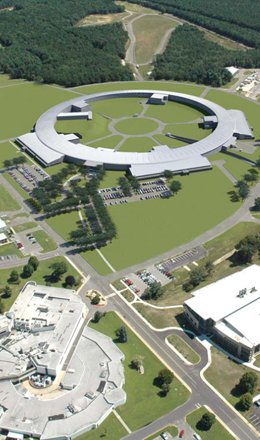
Biological, Environmental & Climate Sciences Dept
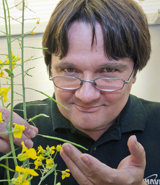
Jörg SchwenderBiochemist
The long term research interest in the lab of Jörg Schwender is to better understand the multi-layered control of plant metabolism,
specifically as related to carbon partitioning in oil storing seeds. The main expertise is on metabolic flux analysis in plants
and various related methods of metabolic modeling.
Research Overview
Plant biomass is of increasing importance as a renewable resource for the production of fuels and of
chemical feedstocks that replace petroleum based materials. As a basis for rational engineering of seeds and other plant storage organs,
our goal is to increase the basic understanding of the functioning of storage metabolism in plants. Of central interest here is the process
of allocation of maternal carbon and nitrogen resources to different storage products (oil, protein and starch) in a sink organ like a
developing seed. By employing isotope tracer experiments, using mathematical models and computer simulation to describe and analyze the
data, the flux distribution in central metabolism can be characterized dependent on physiological condition or genotype.
Lab Members

Kate Kuczynski
Biology Associate

Hai Shi
Postdoc
University of Missouri


Department of Biochemistry
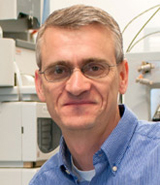
Jay J. ThelenAssociate Professor
Jay Thelen is an expert in proteomics and applies this technology towards understanding plant metabolic regulation and oilseed biology.
Research Overview
Most of the ongoing research in the Thelen lab is centered on the development of quantitative proteomics
approaches and applying these strategies towards seed filling in oilseeds, plants that accumulate oil as the primary storage reserve.
Lab Members

Rashaun Wilson
Graduate Student

Matthew Salie
Graduate Student
Montana State University


Department of Plant Sciences & Plant Pathology
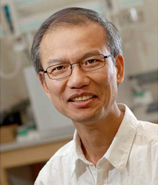
Chaofu LuAssociate Professor
haofu Lu has long-term interests in oilseed metabolism and biotechnology and has made key advancements in the development of Camelina as designer oilseed.
Research Overview
The goal of research in the Lu Lab is to understad genetic and biochemical factors that contribute to the great
diversity of fatty acids in seed oils. A particular interest is to genetically engineer the seeds of camelina (Camelina sativa) to produce
industrial fatty acids and to increase oil content for biofuels and biomaterials.
Lab Members

Jinling Kang
Technician

Mehmet Ozseyhan
Graduate Student

Xiaopeng Mu
Graduate Student

Niranjan Aryal
Graduate Student
University of Nebraska-Lincoln

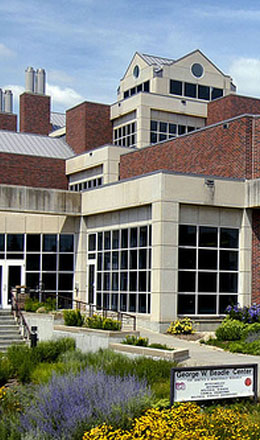
Center for Plant Science Innovation
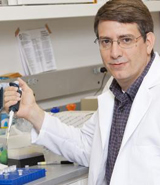
Edgar B CahoonProfessor
Ed Cahoon brings considerable knowledge in the biochemistry and functional genomics of many different FA modifying enzymes,
and in the metabolic engineering of mFA biosynthetic pathways in model plants and oilseed crops.
Research Overview
My lab conducts basic and applied research on plant lipid metabolism. The goals of our research are
to enhance the nutritional and industrial value of crop plants and to probe the synthesis and function of bioactive lipids for nutritional
biofortification and improved agronomic performance of crops.
Lab Members

Peng Wang
Postdoc
Xiangjun Li
Postdoc

Anji Reddy Konda
Graduate Student

Blake Hoffmeyer
Undergrad Student

Kyle Luttgeharm
Undergrad Student
University of Nebraska-Lincoln

Center for Plant Science Innovation
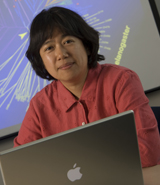
Etsuko MoriyamaAssociate Professor
Etsuko Moriyama is interested in bioinformatics, molecular evolution, and molecular population genetics.
She brings in her expertise in molecular evolutionary and next-generation sequencing data analysis.
Research Overview
We are interested in mining evolutionarily significant information from genomic data and reconstructing the evolutionary process of genes and genomes, especially focusing on mechanisms of protein functional evolution. We also examine and develop bioinformatics methods for protein classification, sequence evolution simulation and next-generation sequence data analysis.
Lab Members

Adam Voshall
Postdoc

Sandeep Reddy
Graduate Student